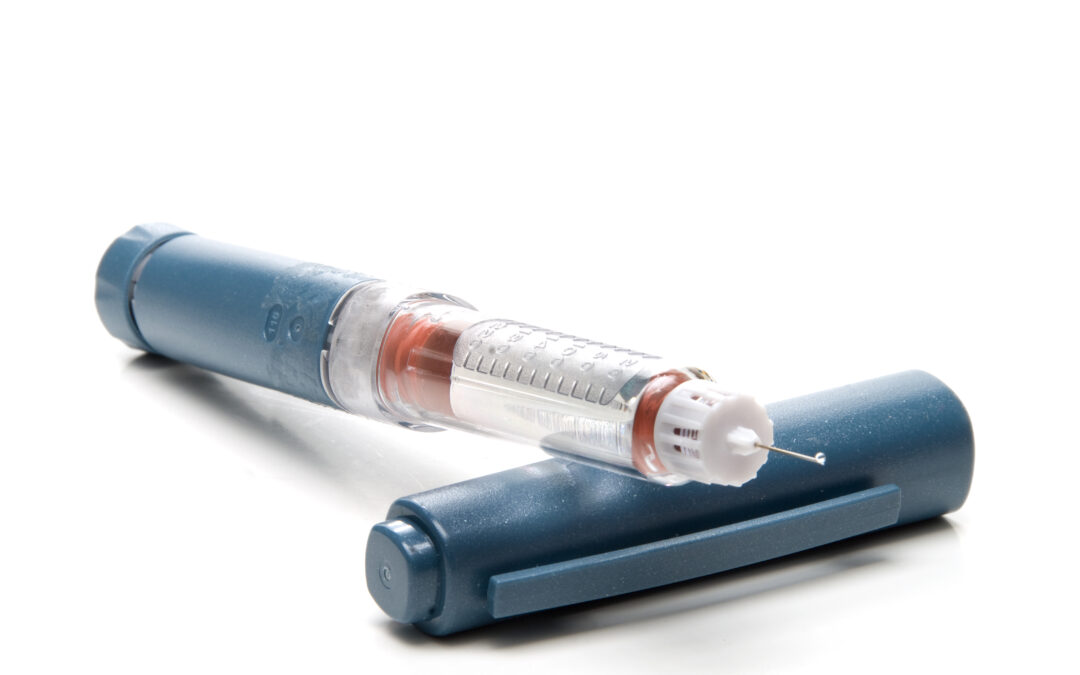
Three drugmakers, which account for roughly 90% of the insulin in the U.S. market, in March 2023 announced that they will cap the cost of insulin for people with private insurance plans.
That includes those on employer-sponsored group health plans and plans purchased on a government-run exchange. The changes mean some or many of your employees will see significant reductions in their pharmaceutical outlays, particularly if they have high copays or deductibles.
The moves come after the Inflation Reduction Act, signed into law in 2022, capped out-of-pocket insulin costs for seniors on Medicare at $35 per month. However, the law does not apply to people younger than 65 who also need insulin.
According to the Centers for Disease Control and Prevention, an estimated 28.7 million people — or 28.5% of the population — were living with diagnosed diabetes in 2022, and chances are high that most employers have workers with the condition. Out of that population, 8.4 million use insulin, according to the American Diabetes Association.
Eli Lilly was the first company to announce, on March 1, that it would cap the cost of all its insulin products at $35 per month, with immediate effect.
On March 14, Denmark-based Novo Nordisk announced that it would lower the U.S. list price of some of its insulin products by up to 75%, putting the fast-acting insulins NovoLog and NovoLog Mix 70/30 at $72.34 for a single vial and $139.71 for a pen. The new pricing will take effect Jan. 1, 2024.
Finally, Sanofi two days later announced that it would cap the out-of-pocket cost of its most popular insulin, Lantus, at $35 per month for people with private insurance. This change also takes effect Jan. 1, 2024.
These changes will bring relief to millions of Americans, particularly after years of insulin makers jacking up their prices. A report on National Public Radio in 2022 noted that the cost of insulin had increased 600% in the past 20 years.
Another report found that some people with high-deductible health plans were paying $350 to $600 a month, for a medicine that costs $6 to make.
Next steps
There are moves afoot to force the industry to cap the price at $35 a month. Legislation has been introduced in Congress that would force drugmakers to cap their insulin price at that level.
You may want to circulate this news with your employees, so they are aware of the new pricing. A 2022 analysis by the Kaiser Family Foundation found that most people on private health insurance would benefit:
In the individual market, the median cost health plan enrollees pay for insulin is $62 per month. One-quarter of them pay $105 a month.
In the small group market, the median cost health plan enrollees pay is $54 per month, while one-quarter pay $83.
In the large group market, the median cost health plan enrollees pay is $54 per month, and one-quarter pay $77.
A surge in demand for pricey, new and highly effective anti-obesity medications could put a financial strain on employers who sponsor their employees’ health plans.
Employers have long offered coverage for certain weight loss tools, such as bariatric surgery if employees qualify for the drastic procedure that requires an operation. Other medications that have been on the market for some time have limited effect, don’t work for everyone and can have serious complications.
But a new class of drugs that has hit the market in the last few years has proven extremely effective in helping people lose weight. As a result, pharmaceuticals like Novo Nordisk’s weight-loss-specific Wegovy and Saxenda, and Ozempic — a diabetes medication from the same company — are now in high demand.
There’s one big catch: These drugs are very costly, putting employers in a quandary. They want to attract and retain high-quality talent, but they don’t want to break the bank on their employee benefits offerings.
A recent survey by the Obesity Action Coalition found that 44% of people with obesity would switch jobs if it meant gaining access to obesity treatment coverage. Likewise, 51% would stay in a job they didn’t like to have access to the coverage.
These findings are significant considering how much these drugs cost and the fact that once someone starts taking them, if they stop, they will usually start gaining weight immediately.
What are these drugs?
This class of pharmaceuticals, known as glucagon-like peptide agonists (GLP-1s), have shown to be highly effective in helping people lose excess weight.
Since news spread of how effective they are, demand for these medications has skyrocketed.
Just three years ago, few people had heard of these drugs and they were not often prescribed, but that’s all changed.
For example semaglutide, which is known under the brand names of Ozempic, Wegovy and Rybelsus, was the fourth-most prescribed drug in terms of total costs in 2021 at $10.7 billion, an increase of 90% from the year prior, according to a report in the American Journal of Health-System Pharmacy.
While many of these drugs are injectable, some like Rybelsus come in pill form.
Shocking costs
Experts warn that if more workers seek out these drugs, payer outlays will spike, resulting in higher group health plan premiums for employers.
The list price of Wegovy is $1,350 per package, which breaks down to about $270 per week — or $16,190 per year.
That said, obesity has its own significant costs and proponents of these medications point at the potential for reduced costs on the back end if people lose weight and keep it off.
Medical costs of obesity in the U.S. were $173 billion in 2019, according to the Centers for Disease Control.
An unsustainable trend
It’s estimated that about 60% of large employers’ health plans cover one of these drugs, although with restrictions, including minimum body mass index (BMI) requirements and prior authorization.
Health plans may require enrollees who qualify for obesity care to first use other lower-priced anti-obesity drugs before they move to a GLP.
The American Gastroenterology Association recommends weight loss drugs for anyone who has a BMI over 30, or 27 if they have other medical complications, such as heart disease or diabetes. According to the CDC, 42% of Americans have a BMI over 30, which is considered clinically obese.
As the uptake of these drugs increases, employers and their health plans will need to make painful choices of to what extent the medications should be covered. Insurers are already considering ways to ensure that people who will most benefit from these drugs have access to them.
The IRS has raised the maximum amount people can funnel into their health savings accounts by 7.8% for 2024, the largest increase ever, brought to you by inflation.
The IRS updates this amount annually, along with minimum deductibles as well as the out-of-pocket maximums for high-deductible health plans. Under its rules, HSAs, which help employees save for medical expenses, are only available to those enrolled in qualified HDHPs.
Here are the changes coming in 2024:
HSA annual contribution limit
Self-only plan: $4,150, up 7.8% from $3,850 in 2023
Family plan: $8,300, up 7% from $7,750 in 2023
Catch-up contribution (for those aged 55 and older): $1,000 (unchanged)
HDHP minimum annual deductible
Individual plan: $1,600, up from $1,500 in 2023
Family plan: $3,200, up from $3,000 in 2023
HDHP annual out-of-pocket maximum
Individual plan: $8,050, up from $7,500 in 2023
Family plan: $16,100, up from $15,000 in 2023
The many benefits of HSAs
An HSA is a special bank account for your’ eligible health care costs. You can put money into your HSA through pre-tax payroll deductions, deposits or transfers. As the amount grows over time, you can continue to save it or spend it on eligible medical and medical-related expenses.
Funds in an HSA roll over from year to year and can earn interest. Many plans also have investment options for the funds to help savers further grow the account.
There are a number of benefits for employees who have an HSA:
The money you contribute to an HSA is not subject to income taxes, which reduces your overall taxable income.
You are not taxed on withdrawals.
If you contribute to their HSA with after-tax money, they can deduct your contributions during tax time on Form 1040.
You can tap the funds for any approved out-of-pocket medical expenses.
You can also grow the account tax-free by investing the funds in the account, sort of like a nest egg for medical expenses in retirement. (That said, 62% of account holders spend the money on year-to-year or near-term expenses, according to a report by the Employee Benefit Research Institute.)
HSA-eligible expenses:
Payments for services or medicine that go towards health plan deductibles, copayments or coinsurance.
Dental or vision care (including orthodontics, eye exams, corrective lenses),
Medical devices.
Certain over-the-counter medicines, like pain relievers, allergy medication, cold and flu medicine, and menstrual products.
Vitamins and health supplements, if recommended by a medical or health professional for the treatment or prevention of a specific disease or condition.
Employers offer flexible savings accounts and health savings accounts to their employees so they can build up funds with pre-tax dollars to pay for health care and related expenses.
For the most part, people use their funds in FSAs and HSAs to reimburse themselves for out-of-pocket costs like copays, health insurance deductibles and the cost of prescription medications.
Unfortunately, many people don’t take full advantage of their FSAs and HSAs — and they could be getting reimbursed for a number of items they already are purchasing.
But while funds in an HSA roll over each year, the funds in an FSA must usually be spent by the end of the year, unless the employer allows its staff to carry over a certain amount to the following year.
Employers can offer one of two options to give their employees more time to spend their funds:
Grace period — You can provide an extra 2.5 months each year to spend the money in their flex accounts, which in most cases means until March 15 of the following year. In essence, they get 14.5 months to spend the funds. Whatever they don’t spend goes back to you, the employer.
Carry over — This allows your employees to keep some of the unspent money in an FSA from one year to the next.
In 2023, the maximum an employee can carry over is $610. This means that if they have money left in their FSA at the end of the plan year in 2023, they can keep up to $610 of it. If they have more than that at the end of the year, the rest goes back to you.
As a result, while employees with HSAs are not pressured to spend funds in their accounts every year, those with FSAs are. According to the Employee Benefit Research Institute, 48% of workers forfeited an average of $408 of their FSA funds in 2020.
Both FSAs and HSAs have the same rules for what they will cover.
However, employees often are unaware of the myriad of goods and services they can spend their funds on. To help your staff, you can educate them about these goods and services, and often the companies that host these accounts will provide a list of them. Typically, an expense is eligible if it mitigates, treats or prevents a specific disease or ailment from affecting the body.
These expenses are eligible too
You may also want to let them know about these 16 surprising eligible expenses:
Over-the-counter medicines — Anything from cough syrup and pain relievers to allergy medications and eyedrops.
Menstrual hygiene products
A fitness program if the person is suffering from a health issue like diabetes, hypertension or obesity.
Most health insurers plan to continue offering free preventative care services despite a federal judge having imposed a nationwide injunction on an Affordable Care Act requirement that these services are covered with no out-of-pocket costs on the part of patients, according to a letter by industry trade groups.
With concern growing that this important part of the ACA would suddenly be revoked, some of the nation’s largest insurers and industry trade associations penned a letter to lawmakers, stating that: “The overwhelming majority do not anticipate making changes to no-cost-share preventive services and do not expect disruptions in coverage of preventive care while the case proceeds through the courts.
“Our associations have long supported preventive care and continue to do so. By responding together, we wish to make clear our strong support for continued access to preventive health care for millions of Americans who rely on it. ”
Signatories to the letter include the Blue Cross Blue Shield Association, the American Benefits Council and America’s Health Insurance Plans.
The letter was written in response to Democrats on health committees in the U.S. Senate and House or Representatives asking for information from 12 of the nation’s largest health insurers on how they plan to respond to the decision by the U.S. District Court for the Northern District of Texas in Braidwood Management Inc. vs. Becerra.
That decision struck down the ACA requirement that most health plans and issuers cover without cost-sharing the more than 100 preventative services recommended by the U.S. Preventive Services Task Force (USPSTF).
The judge in the case reasoned that the ACA requirement to cover with no cost-sharing medications for HIV prevention violates the rights of the plaintiffs who have religious objections to these medicines. The order immediately blocked the requirement nationwide to cover not only the HIV-prevention medicines, but all preventative services recommended by the USPSTF.
The U.S. Department of Health and Human Services has appealed the decision to the U.S. Fifth District Circuit Court and the Justice Department has asked that the decision be paused as the appeal process plays out.
The lawmakers also asked if the insurance carriers would honor the ACA’s rules until all appeals are exhausted, including all the way to the U.S. Supreme Court.
Fallout from the ruling
The federal court’s decision has caused panic and concern among patients’ rights advocates that insurers would immediately stop covering these services, which have become an essential part of health care in the last decade.
If the ruling stands and survives appeals, insurers could impose deductibles and copays for potentially lifesaving screening tests.
The lawmakers on April 13 wrote in their letter to the insurance industry: “We are very concerned that the decision will unnecessarily cause confusion, force consumers to pay out-of-pocket, and result in patients foregoing preventive services screenings and treatment altogether. There is evidence that even modest cost-sharing deters patients from accessing care and exposure to cost-sharing reduces the use of preventive care.”
The trade associations that responded to the lawmakers’ request to continue honoring the ACA rules said that preventative care is popular and effective, and that the decision from the federal judge likely is just the start of a lengthy legal process.
If the decision were to stand, there are still some preventative screenings that are not covered by the ACA, and it would not affect all states. There are 15 states with laws requiring insurers to cover with no patient cost-sharing the same preventative services that the federal law requires.
A recent article has highlighted the breadth of Big Pharma’s control of information regarding their medications, even reaching as far as drug research papers that are published in major medical journals.
The article “America’s Broken Health Care: Diagnosis and Prescription” in the Imprimis publication of Hillsdale College, cites studies finding that 74% of pharmaceutical research is conducted by for-profit research companies and only 26% by universities, which calls into question how much the results can be relied upon.
Even more surprising, 50% of contracts that drug companies have with academic institutions allow drug makers to ghostwrite articles and allow the named authors to only suggest revisions, but not make corrections or edit the articles. After seizing control of these “research” papers, the pharmaceutical companies will often use the published papers to market their expensive drugs and send their sales reps to doctor’s offices to convince practitioners to prescribe their medications … but at whose expense?
Many of these new drugs are extremely expensive and they may have a host of side-effects that plan sponsors and patients would want to avoid. Particularly since there are often alternative proven therapies on the market that are effective and significantly less expensive.
With that in mind, how can plan sponsors ensure their members are getting the best medications for their specific conditions and that they aren’t being steered towards expensive alternatives that may not be any better than established alternatives?
That’s where US-Rx Care can help by ensuring Better Outcomes and Lower Costs.
Through our fiduciary pharmacy risk management services, our clinicians work in your and your members’ best interest. They evaluate prescriptions written by your employees’ doctors with the goal of helping you and your members access the best therapies and where possible save money with less expensive pharmaceuticals. To ensure both the effectiveness and the health of your members, US-Rx Care relies on a combination of resources, including National Organizations’ guidelines, such as the American College of Rheumatology, American Academy of Dermatology, our practicing physicians that participate on our P&T Committee, in addition to academic research.
US-Rx Care’s programs are proven to deliver Better Outcomes and Lower Cost, the holy grail in care management.